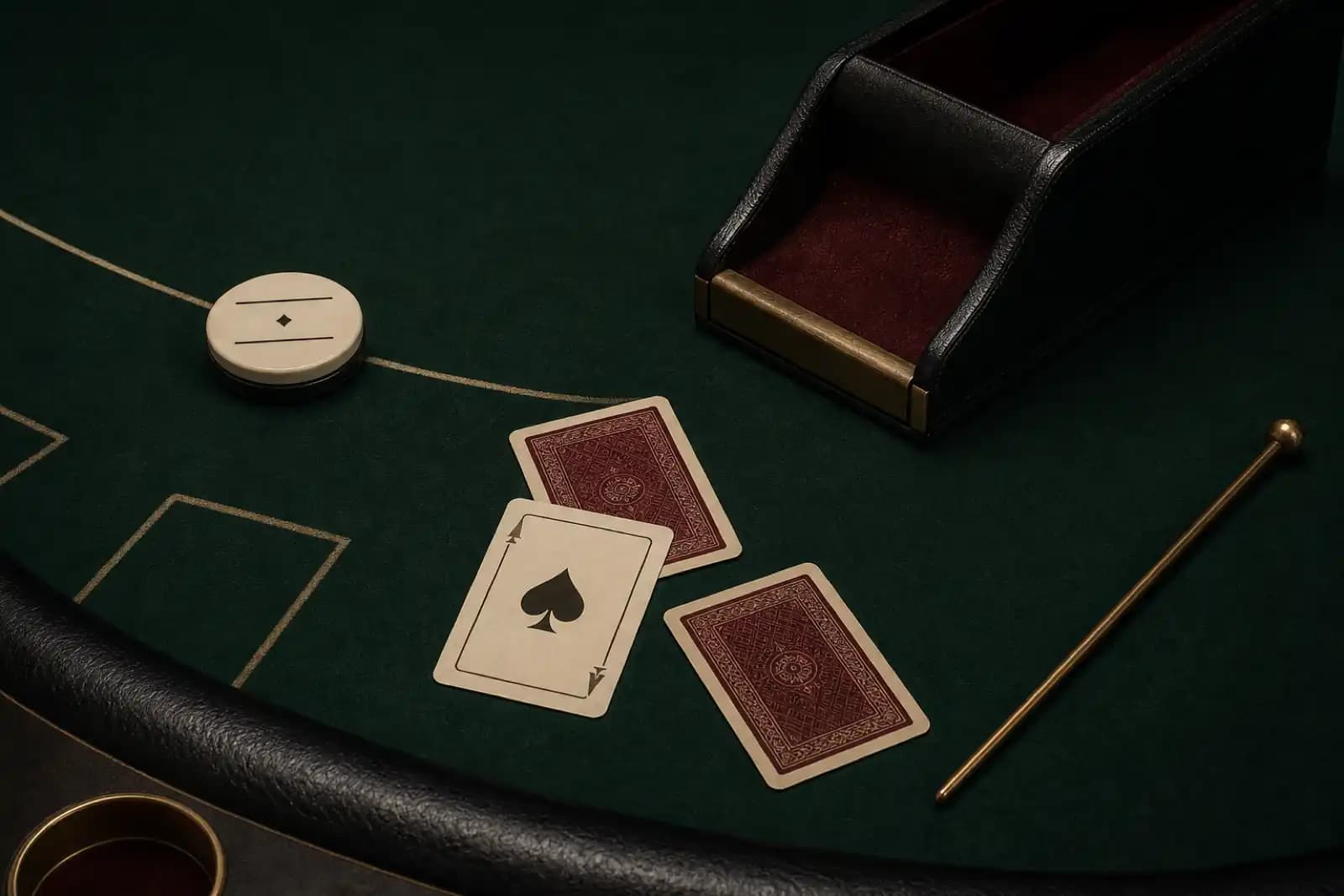
S17 and H17 describe one dealer decision
S17 means the dealer stands on all 17s, including soft 17. H17 means the dealer hits soft 17 and stands on hard 17 or more. A soft 17 is a hand such as A,6, where an ace is counted as 11. Once the dealer draws a card that would make the hand exceed 21, the ace can count as 1 and the total changes.
The distinction is easy to miss because many dealer hands never reach soft 17. It still belongs in the game profile. A dealer who hits A,6 can improve to 18 through 21 or bust, while a dealer who stands finishes immediately. In a common eight-deck benchmark with double after split, H17 is calculated as roughly 0.22 percentage points worse for the player than S17.
| Hand class | Primary decision lane |
|---|---|
| Hard total | Total row |
| Soft total | Ace-flexible row |
| Pair | Split row first |
Your strategy chart must match the dealer policy
Basic strategy models the dealer’s future draws from the visible upcard. When the dealer’s soft-17 rule changes, a few player decisions change with it. Soft doubles and some surrender choices are common boundary cases. A table marked H17 should use an H17 chart, even if most of the grid looks familiar.
In Blackjack Index, select the dealer policy before opening Strategy Tables or sending hands to Strategy Checker. Try the same soft total against a dealer ace under S17 and H17. A difference in recommendation is evidence that the chart is responding to the rule profile rather than offering a generic answer.
American-hole-card dealing: check before play when the rules say so
In the common American-hole-card procedure, the dealer receives one face-up card and one face-down hole card at the initial deal. When the upcard is an ace or a ten-value card, the dealer may check the hole card for blackjack before players act. If the dealer has a natural blackjack, the main hand is resolved before a player can hit, double, or split.
The precise timing matters. A dealer ace may also trigger an insurance offer under the table rules. A player blackjack against a dealer blackjack normally pushes. A player should follow the posted procedure, because some variants use a different check or reveal order.
No-hole-card procedure: find out what happens to extra stakes
In a European no-hole-card game, the dealer can begin with only the upcard and receive the second card after players complete their actions. The dealer’s eventual blackjack is therefore discovered later. The critical rule is the settlement of the original wager and any extra stakes created by doubling or splitting.
Under a full-loss version, a dealer blackjack can take the additional double or split wagers as well as the original bet. Some games use an “original bets only” treatment that protects those extra wagers. The labels vary, so read the game rules rather than relying on a regional name. The Rules Compare configuration should state the exact procedure before its result is treated as comparable to an American-hole-card game.
| Question | American-hole-card procedure | No-hole-card procedure |
|---|---|---|
| When is the dealer’s second card dealt? | At the initial deal, face down. | After player actions, under the stated rules. |
| When can a dealer blackjack be checked? | Before player actions when the procedure calls for a check. | After the dealer receives the second card. |
| What happens to split and double stakes? | Resolve under the posted table procedure. | Confirm whether extra stakes are at risk or protected. |
The dealer’s turn happens after player decisions
Except where a dealer blackjack ends the hand at the initial check, players complete their decisions first. The dealer then reveals any hole card and draws according to the fixed dealer rule. The dealer does not choose among hit, stand, double, split, or surrender. This order creates blackjack’s positional cost: a player who busts loses before the dealer’s later result can help.
That is why a dealer bust is not a promise to stand on every fragile player total. Strategy compares the expected result of the available actions, including the chance that the player busts first. The dealer’s upcard and the selected S17 or H17 rule supply the information needed for that comparison.
A practical placard-reading routine
- Does the dealer stand on soft 17 or hit it?
- Is a hole card dealt at the start?
- With an ace or ten-value upcard, does the dealer check for blackjack before play?
- In a no-hole-card game, what happens to a doubled or split stake when the dealer later has blackjack?
- Are insurance and surrender offered, and at what point in the procedure?
Those five lines describe more than table etiquette. They determine which strategy chart applies and whether a house-edge comparison uses the right risk model.