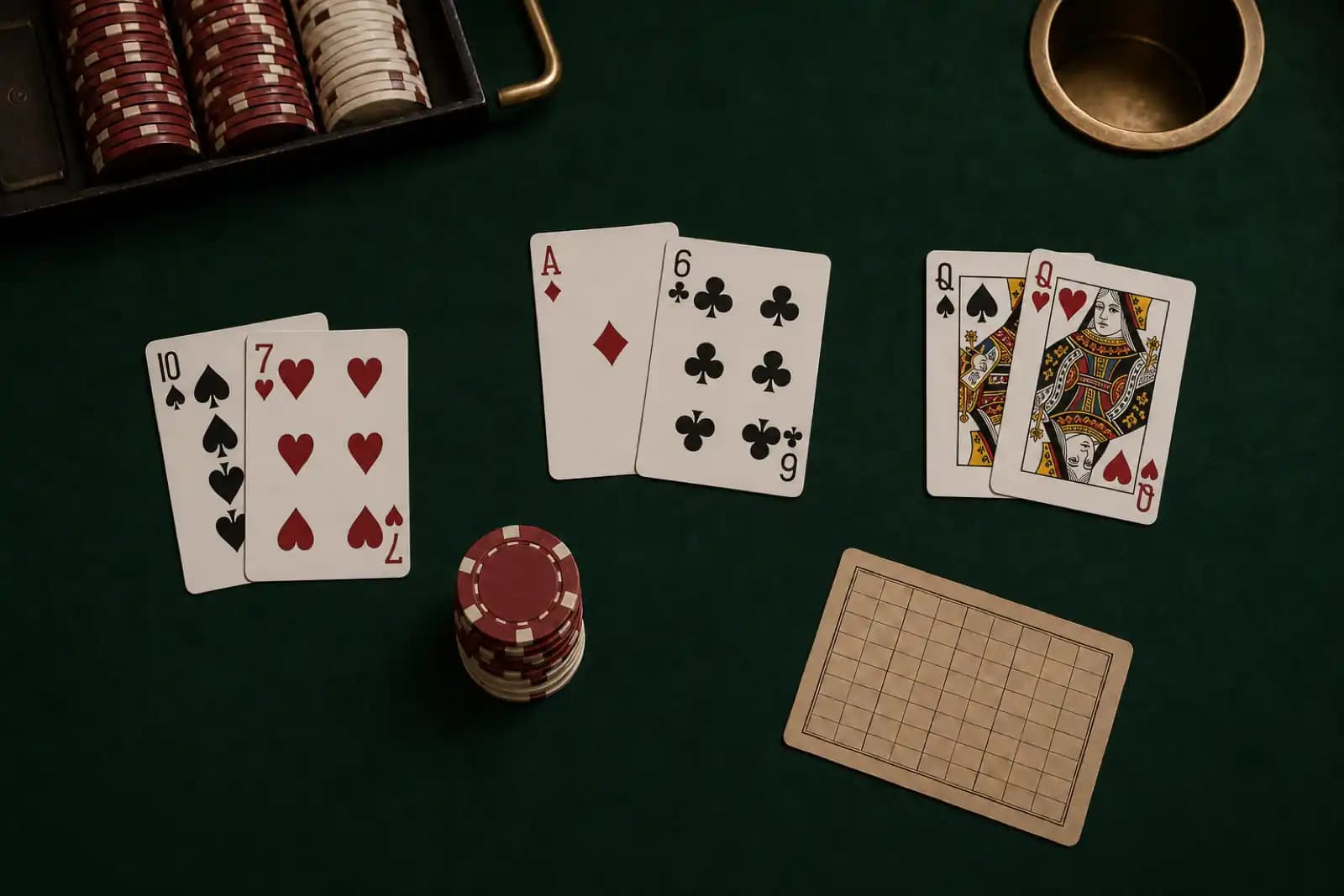
Featured guide6 min read
Basic Strategy: Hard Hands, Soft Hands and Pairs
A strategy chart is a compact decision model. Read the hand correctly, match the chart to the table rules, and let the dealer upcard set the context.
Blackjack knowledge, indexed
Rule-aware guides connect table procedure, strategy, probability and long-run risk to the tools that let you test each idea.
A strategy chart is a compact decision model. Read the hand correctly, match the chart to the table rules, and let the dealer upcard set the context.
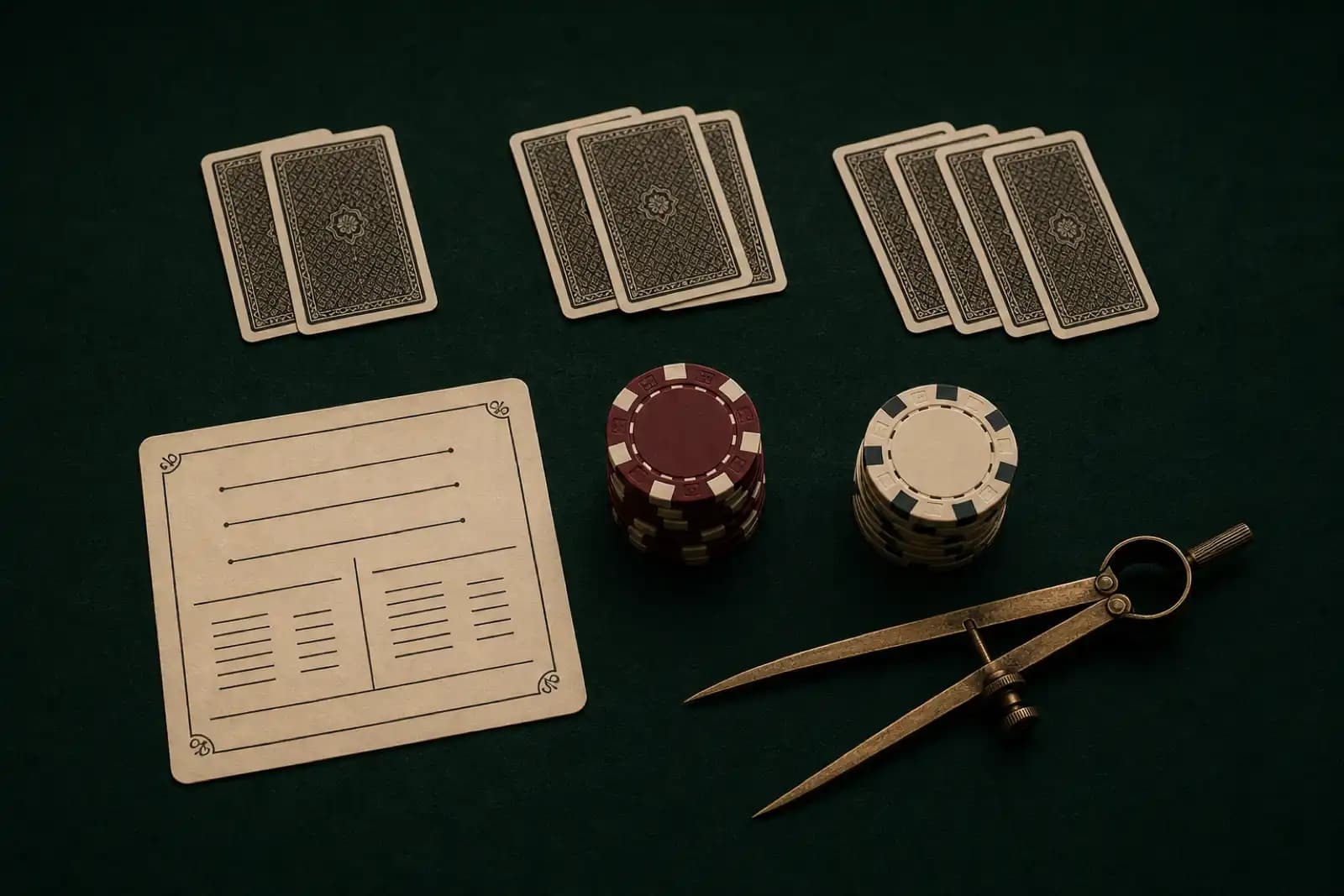
A blackjack label does not define the game. Payouts, dealer rules, split rights and the hole-card procedure all change the expected cost of the same opening wager.
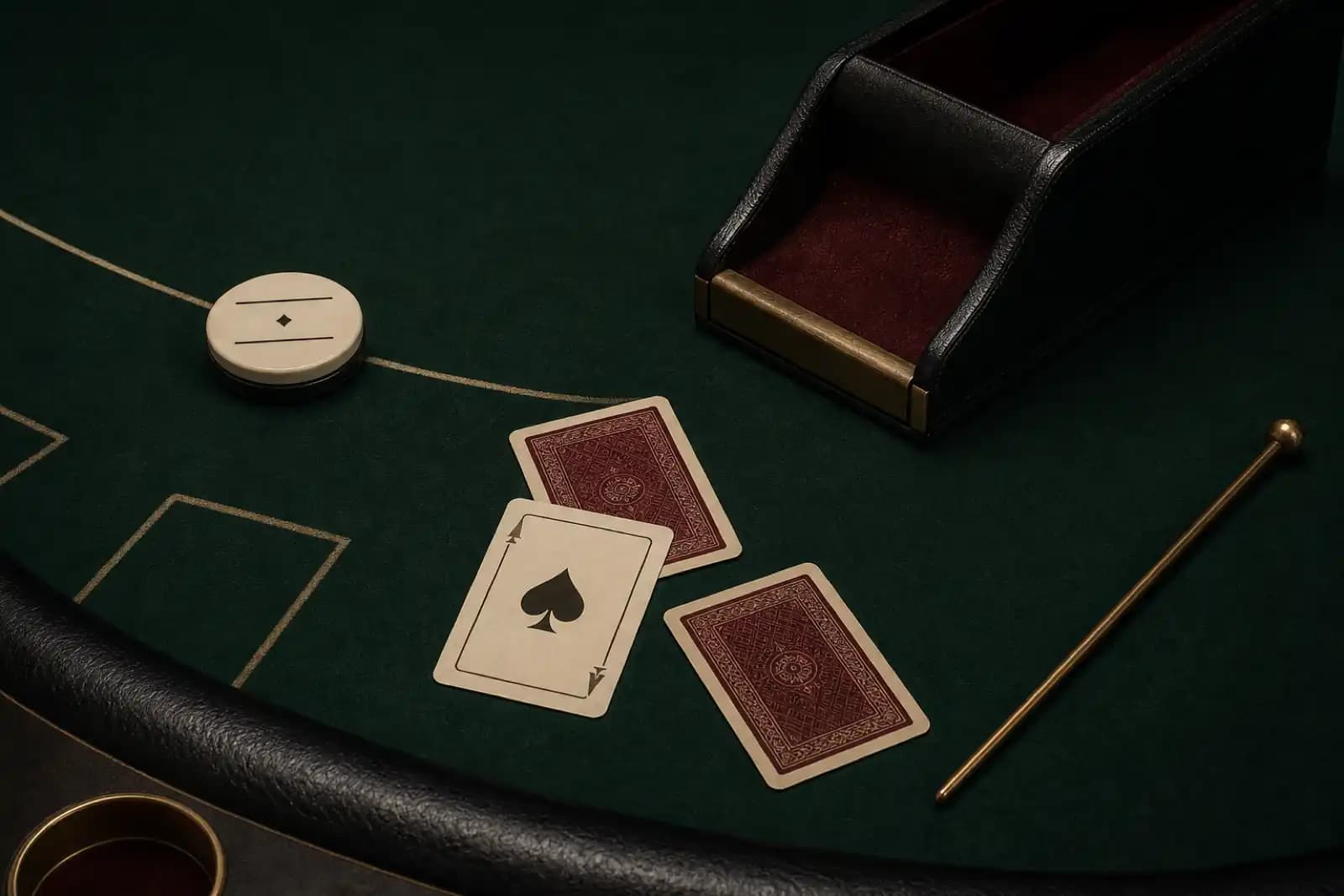
Dealer rules determine when a hand ends and when a hidden blackjack is checked. Those details shape the strategy chart as well as the table’s long-run expectation.

A next-card percentage describes one draw from the remaining shoe. A final-outcome percentage follows every legal draw, decision, and dealer rule that can still occur.

A count summarizes exposed-card composition. It can support a ruleset-specific estimate, yet it cannot reveal hidden cards or remove the ordinary variance of blackjack.
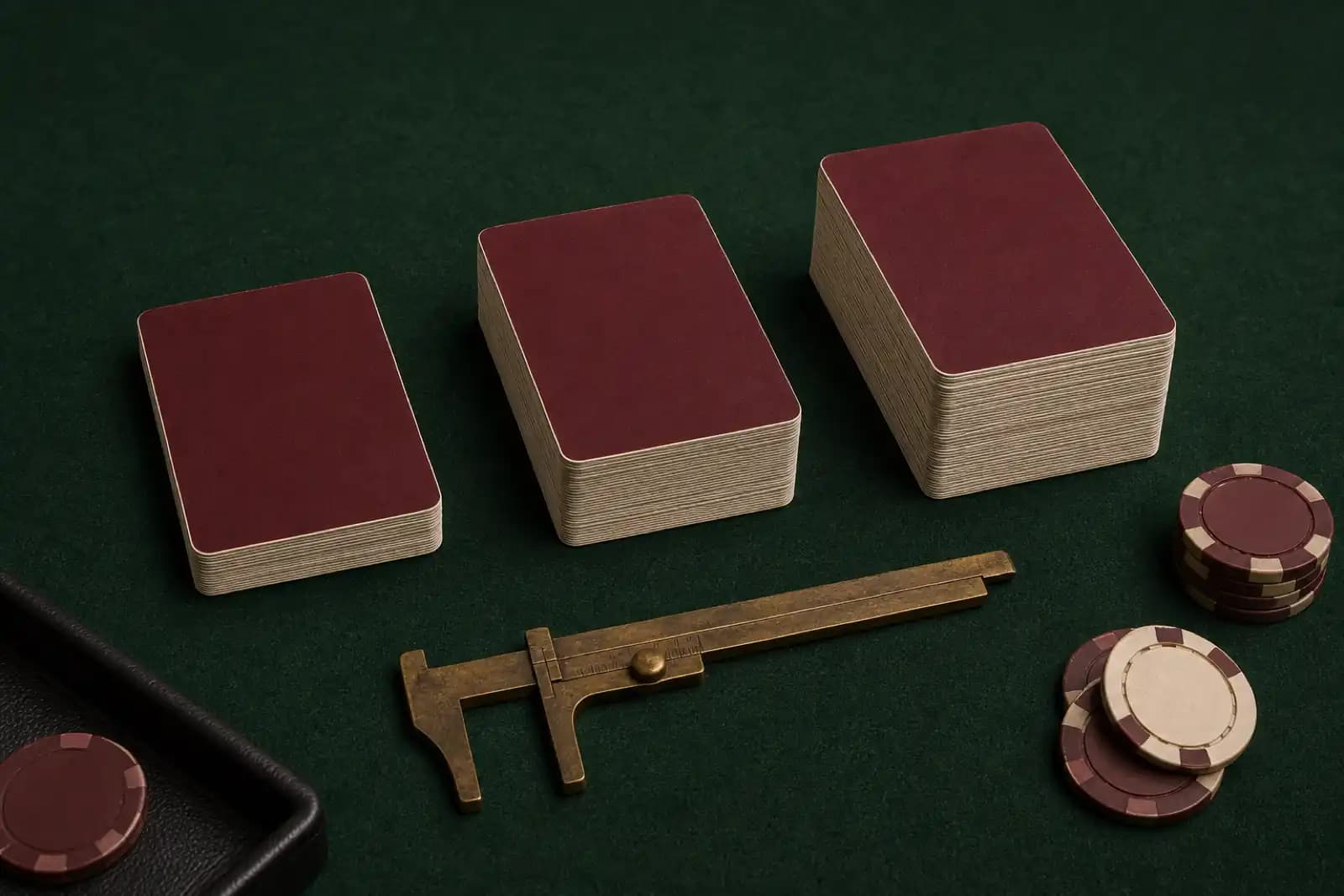
Deck count changes how strongly each exposed card affects the remaining shoe. House edge still depends on every stated rule, the payout, and the strategy used.
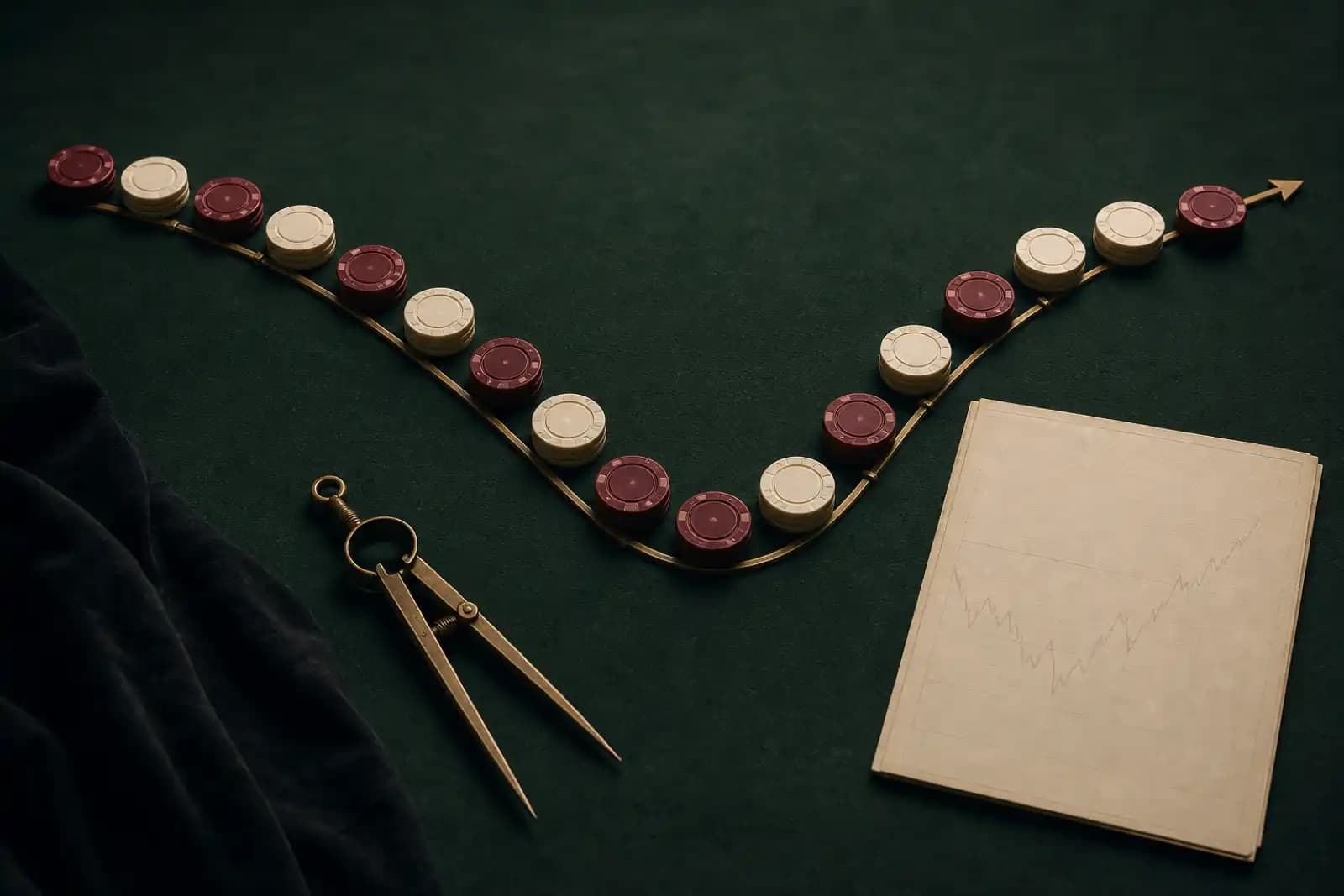
A bankroll plan starts with the spread of possible outcomes. Use expected value, volatility and path-dependent drawdowns to set limits for a defined educational session.
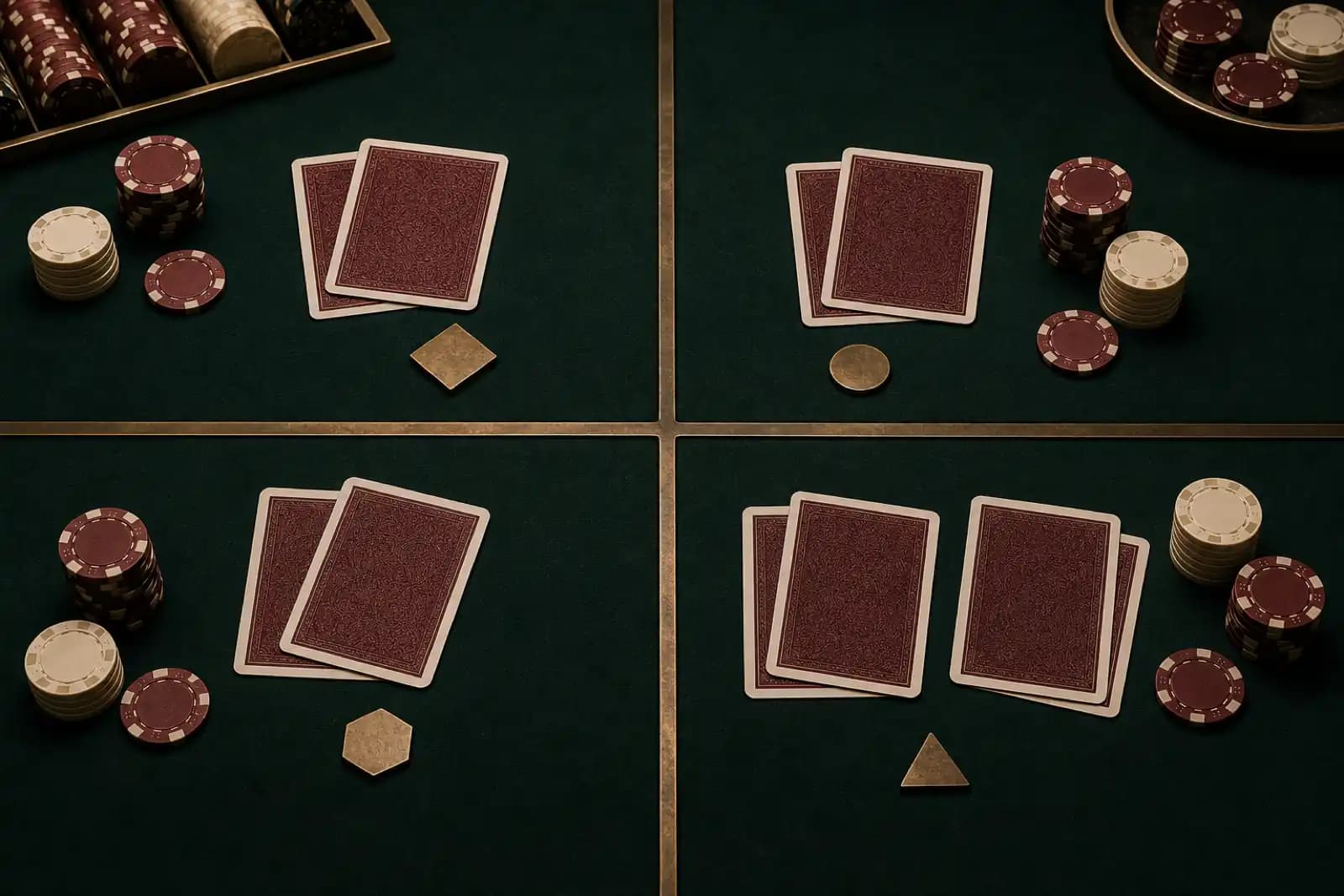
Deal procedures, deck composition and settlement rules create different decisions and different models across these four games.